BetterPet Passport
Continuously evolving a complex guest experience that helps travelers meet property requirements before short-term rental stays.
OVERVIEW
Understanding the product
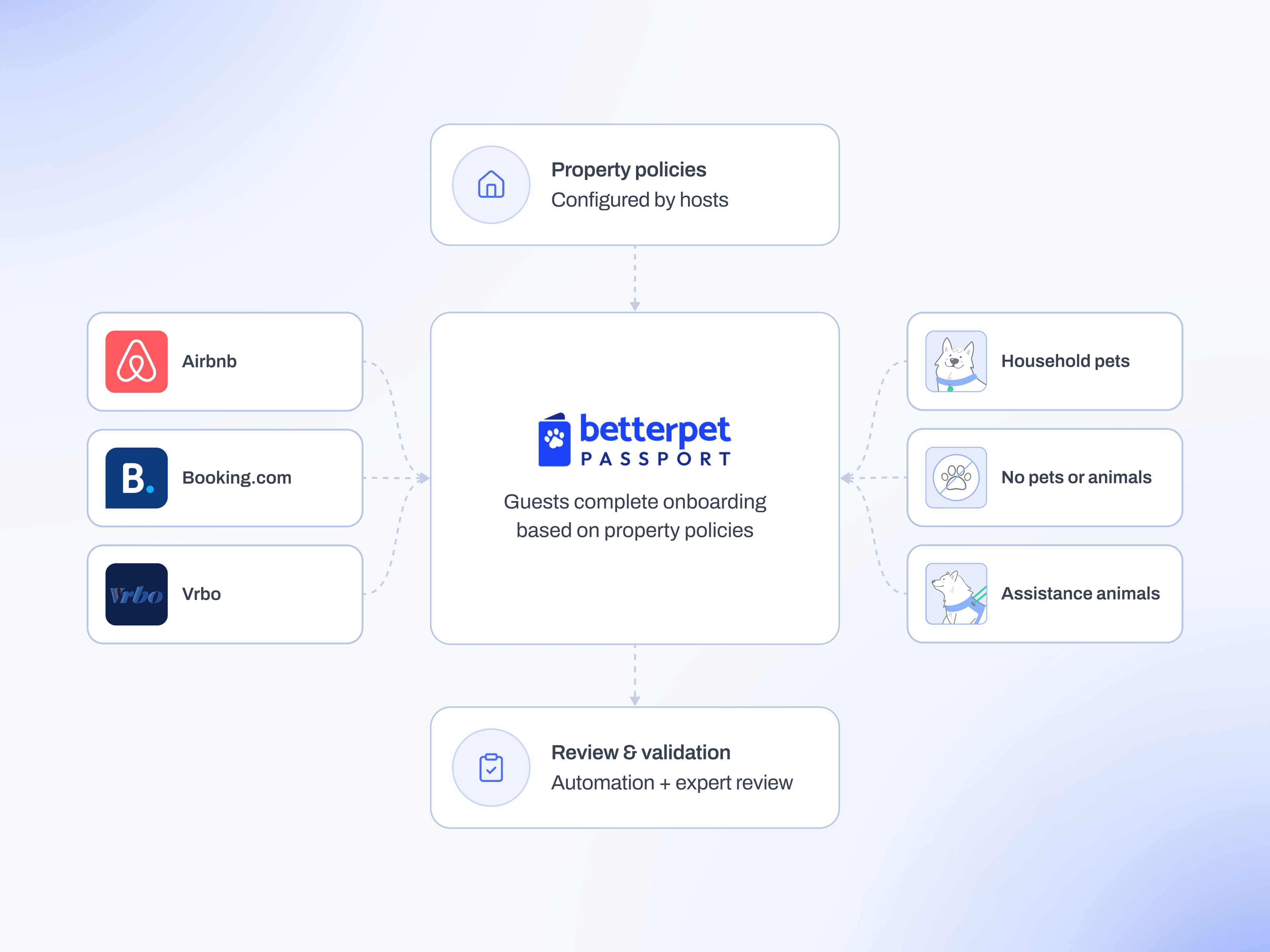
BetterPet Passport is the consumer-facing experience within PetScreening’s short-term rental ecosystem. Property managers configure pet policies and requirements, while guests use BetterPet Passport to complete the information and documentation required before their stay.
Over nearly two years, I collaborated with Product and Engineering to continuously evolve this experience through research, product analytics, usability testing, and iterative design. Rather than redesigning the onboarding from scratch, this work focused on continuously improving a complex product by simplifying interactions, reducing uncertainty, and adapting the experience as product requirements evolved.
PROBLEM & CONTEXT
Balancing complex product requirements with an intuitive guest experience
BetterPet Passport wasn’t a standalone product. Every guest experience was shaped by property-specific policies configured by hosts in PetScreening’s management platform.
Depending on the property, guests could be asked to provide different information, documentation, or complete entirely different flows, including guests traveling with pets, without pets, or with assistance animals. The challenge was creating an experience that remained clear and intuitive as the product evolved to support new policies, guest scenarios, and business requirements.
Throughout the product’s evolution, my focus was reducing friction, improving completion rates, and helping guests confidently submit the information required before their stay.
RESEARCH & INSIGHTS
Understanding user behavior
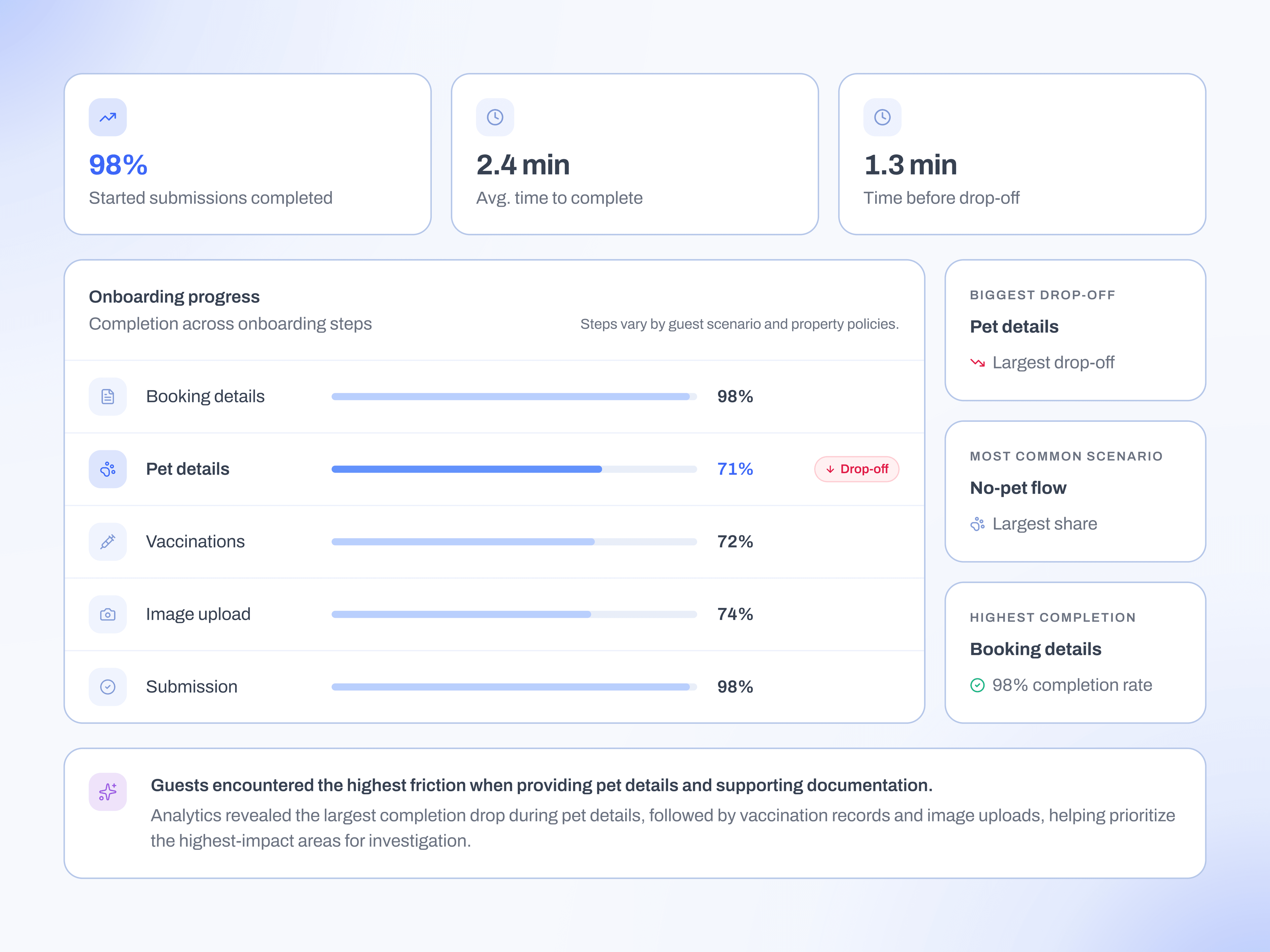
As the product matured, we combined quantitative and qualitative research to better understand where guests experienced friction, why it happened, and how the experience could continuously evolve.
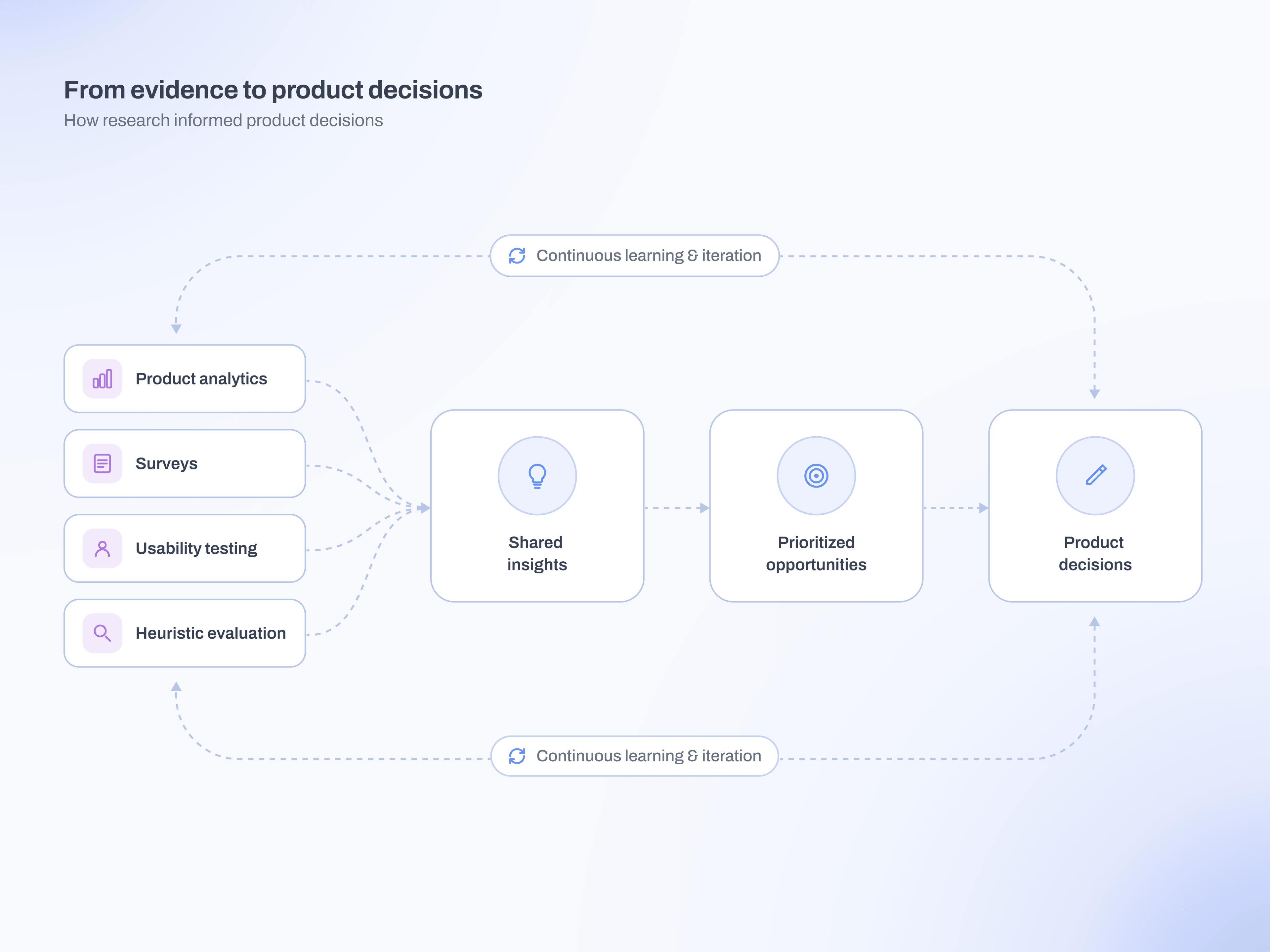
Research methods & tools
Key findings
- Guests needed clearer guidance to understand why information was required.
- Reducing uncertainty was just as important as reducing the number of steps.
- Better system feedback helped users understand what had happened and what to do next.
- Trust signals helped guests feel more confident when submitting information.
APPROACH
Turning insights into product decisions
Understand
Synthesized quantitative and qualitative insights to identify friction, understand its causes, and uncover opportunities for improvement.
Prioritize
Balanced user needs, business goals, and technical constraints to prioritize the highest-impact improvements.
Design & iterate
Designed and refined solutions that reduced uncertainty, improved usability, and simplified complex experiences.
Measure & evolve
Measured outcomes after release and continued improving the experience as new research, product insights, and business requirements emerged.
SOLUTION
Establishing a design strategy for a complex product
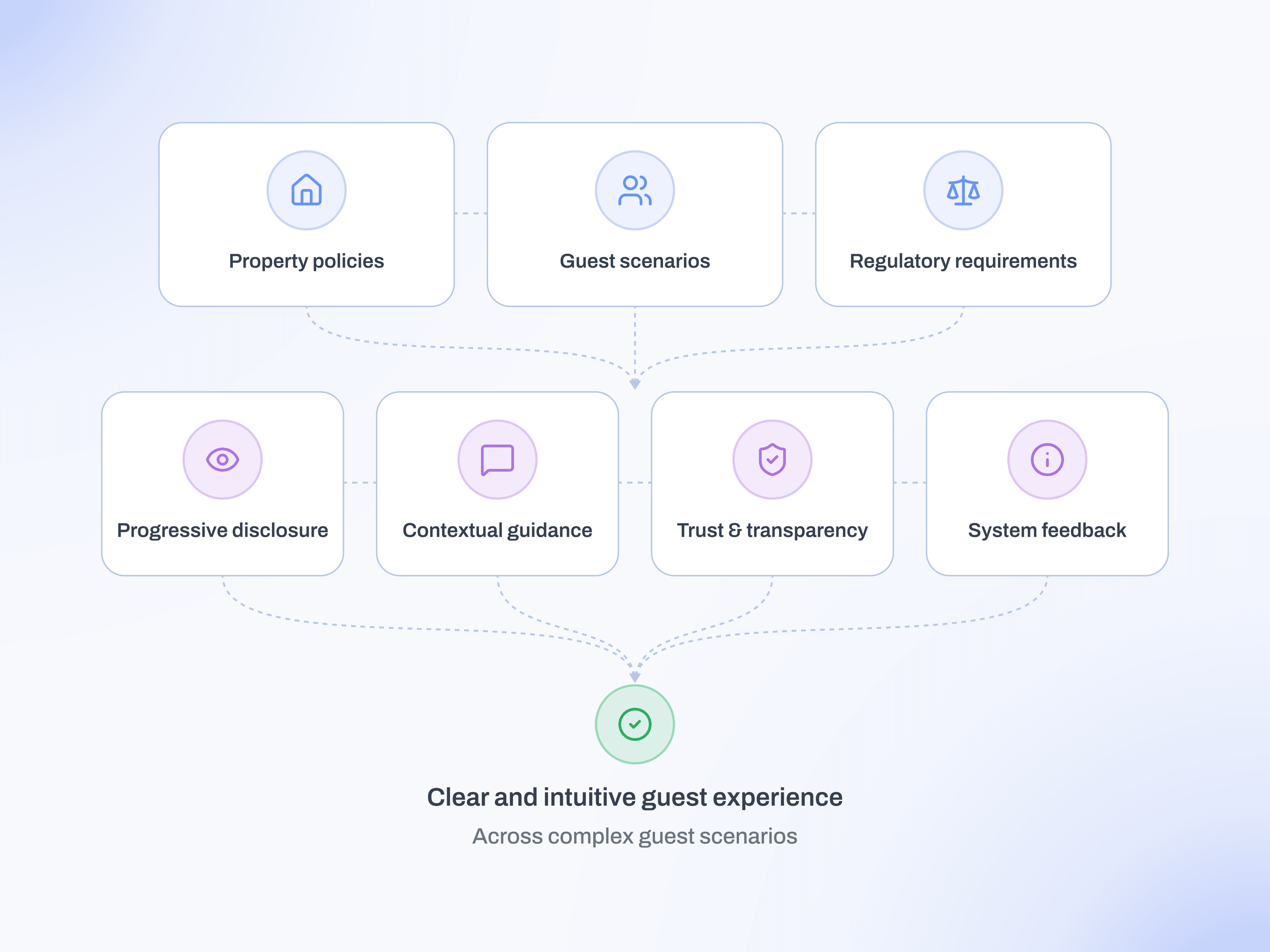
As recurring patterns emerged from research and product insights, four core design principles guided the product’s evolution: reducing cognitive load, providing contextual guidance, building user confidence, and improving system feedback.
Progressive disclosure reduced cognitive load by presenting information only when it became relevant. Contextual guidance helped guests understand complex policies, legal requirements, and why specific information was being requested. Trust-building patterns, including booking context and platform indicators, increased confidence when submitting personal information and supporting documentation.
Together, these principles created a consistent foundation for evolving the product as new guest scenarios, business requirements, and regulations emerged. The following design decisions show how these principles guided improvements across the guest experience, while also highlighting additional opportunities uncovered as the product continued to evolve.
DESIGN DECISIONS
Design decisions that improved the experience
The following decisions demonstrate how these principles were translated into the product. Each one addressed a different source of friction identified through research, product insights, and continuous iteration.
Reducing cognitive load through progressive disclosure
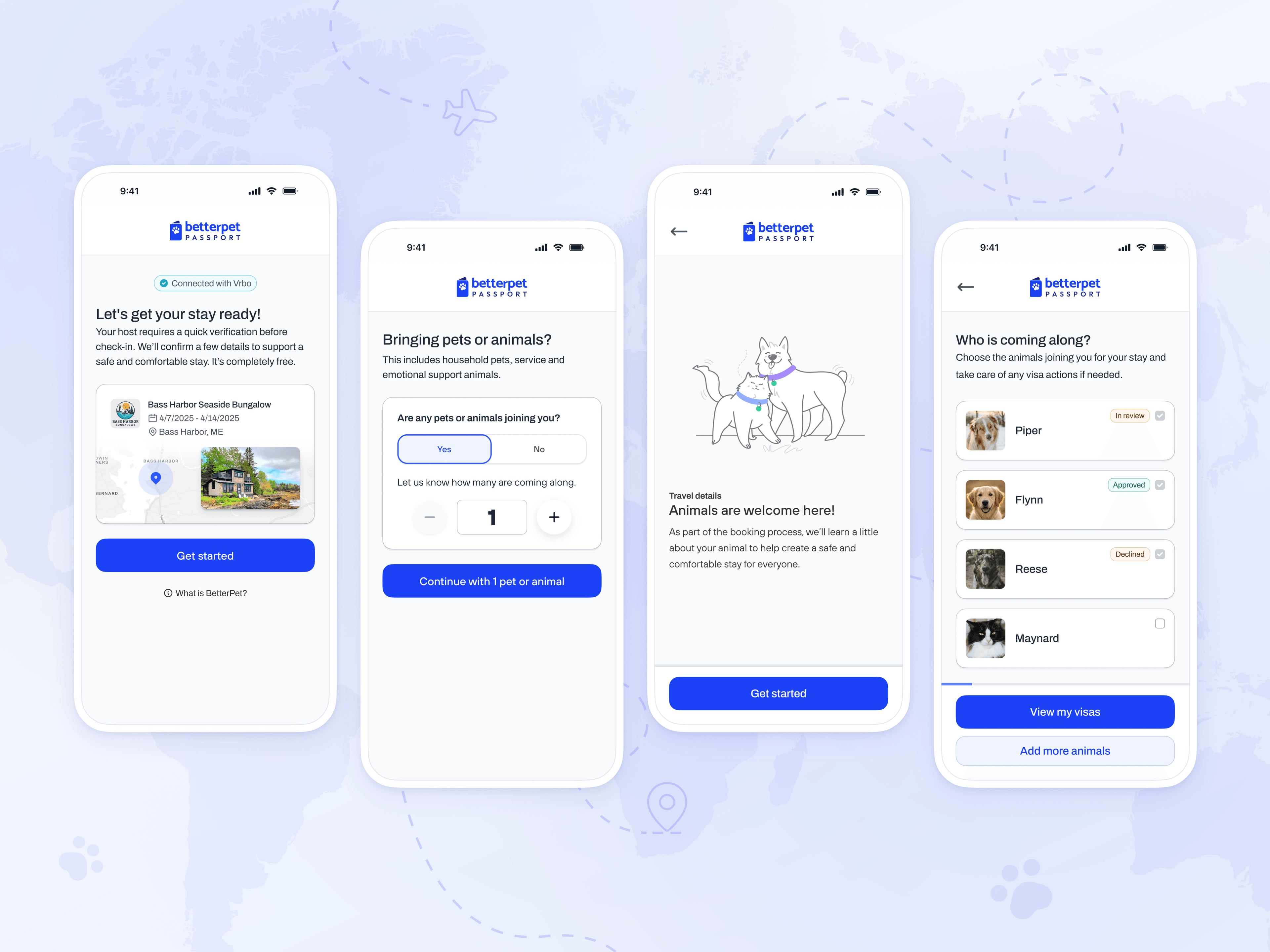
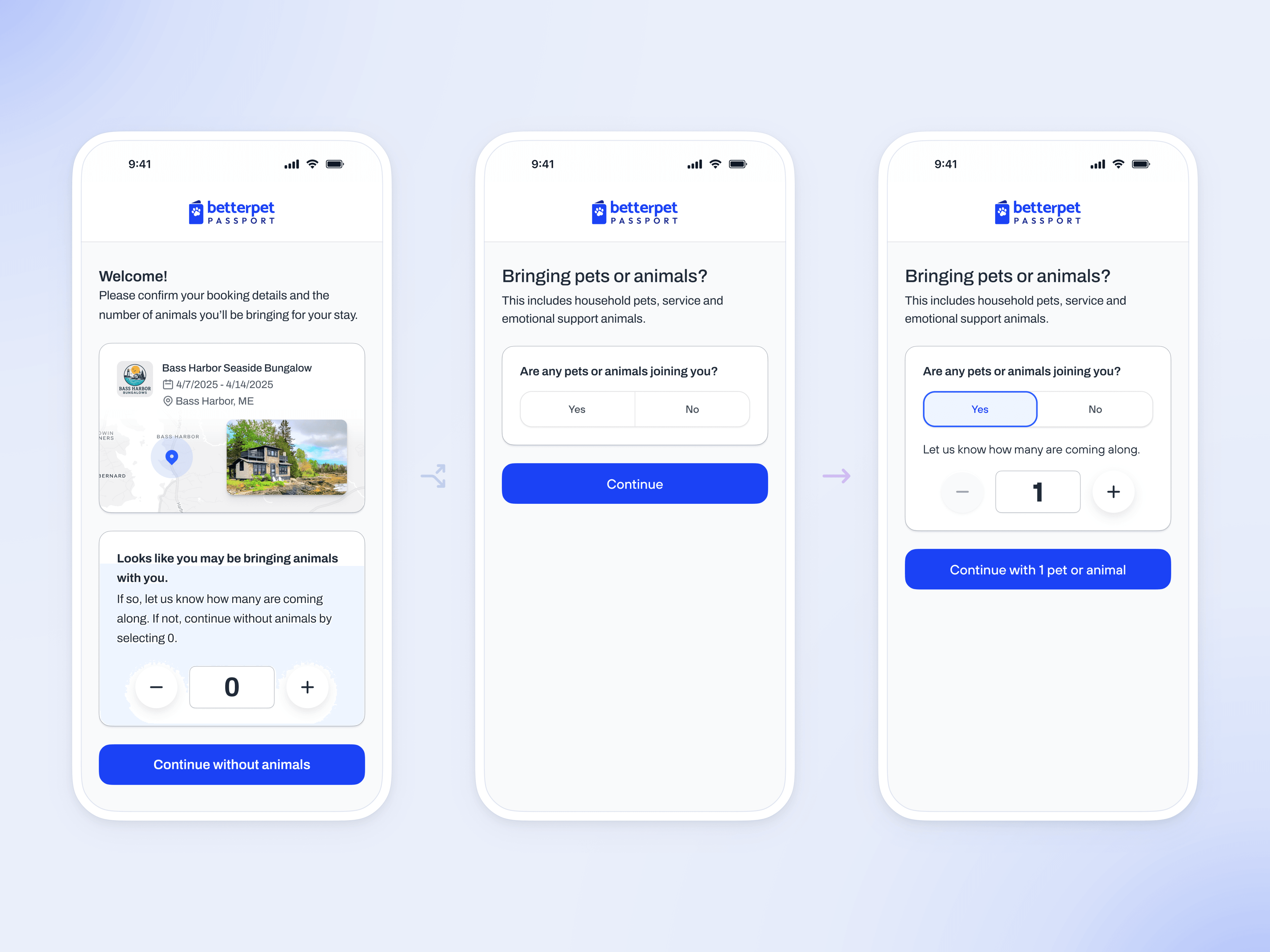
Research revealed that guests often felt overwhelmed when multiple questions and decisions appeared at once. Rather than presenting every input upfront, the experience was reorganized into smaller, contextual steps that only appeared when relevant.
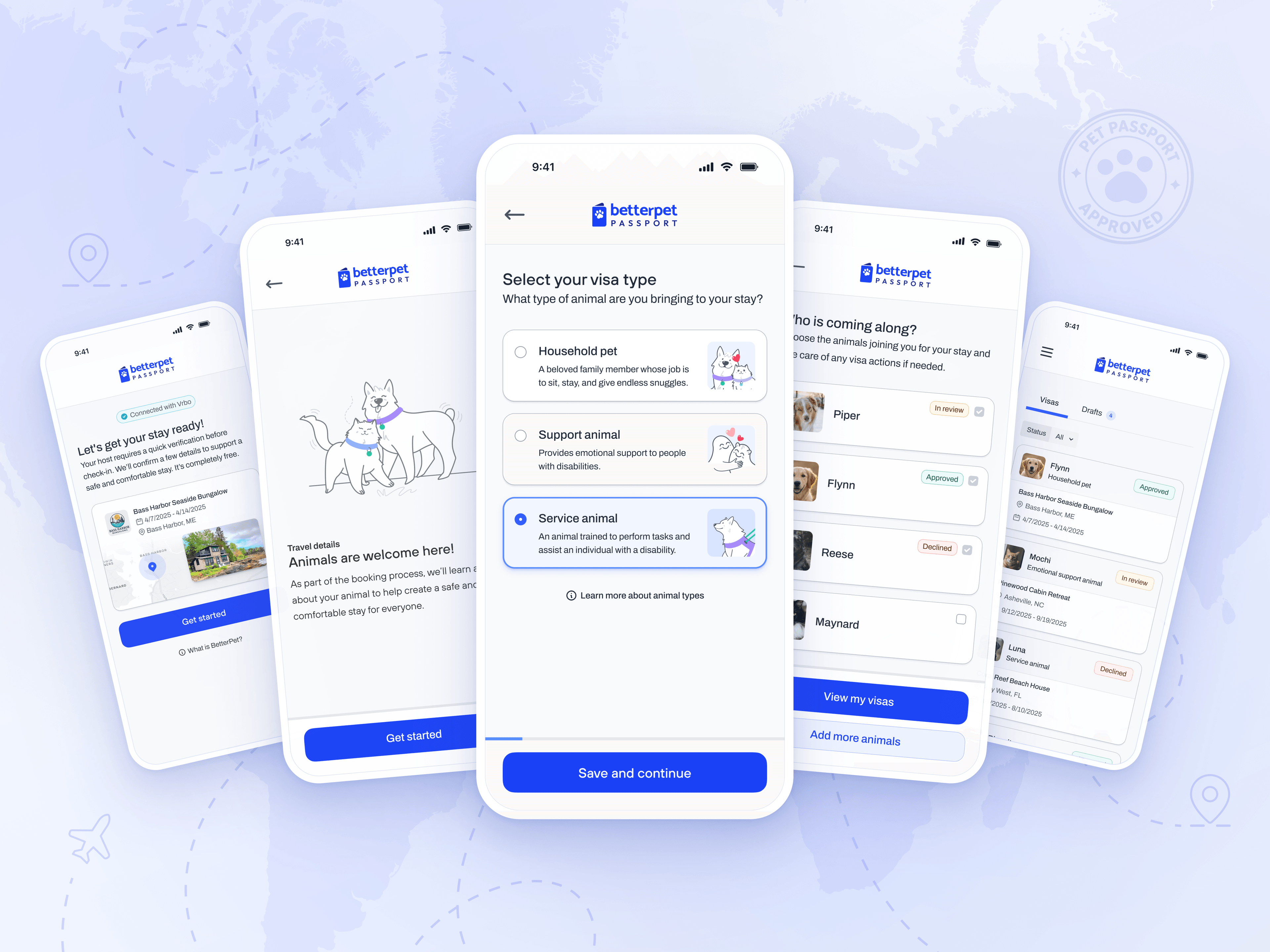
One example was the pet selection flow. Instead of immediately displaying a numeric selector, guests were first asked a simple yes-or-no question about whether they were traveling with pets. Only after selecting Yes would the pet count appear, eliminating ambiguity observed during usability testing and creating a more intuitive flow for both pet and no-pet guests.
Reducing uncertainty through contextual guidance
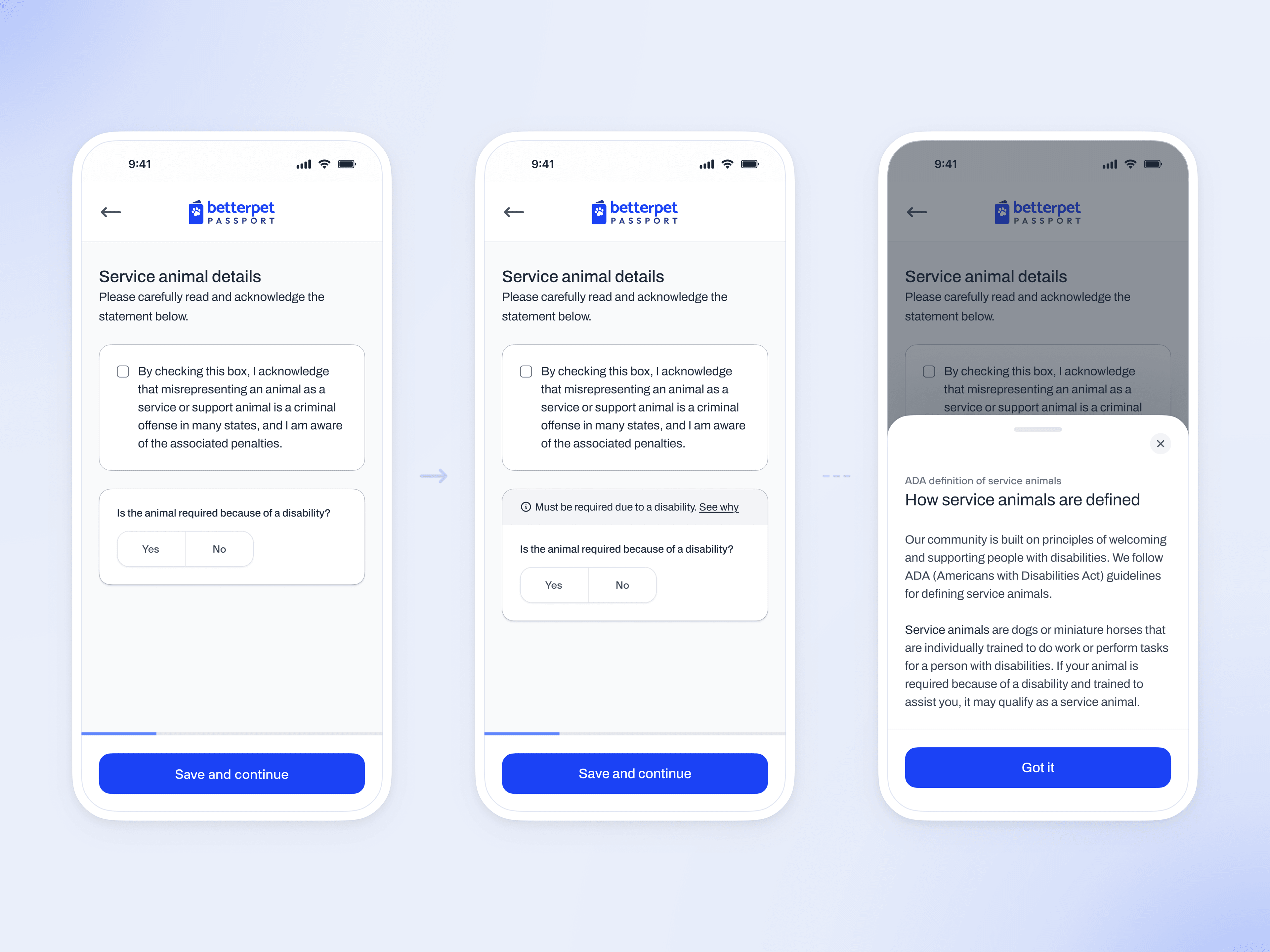
Research showed that guests often questioned why specific information and documents were required, particularly when legal requirements or host policies weren’t immediately clear. Rather than expecting users to infer this information, contextual guidance was introduced throughout the experience to explain what was being requested, why it mattered, and what would happen next.
Clear explanations, legal context, and supporting content helped guests make informed decisions throughout the journey, reducing uncertainty without adding unnecessary steps or interrupting the flow.
Building trust through transparent communication
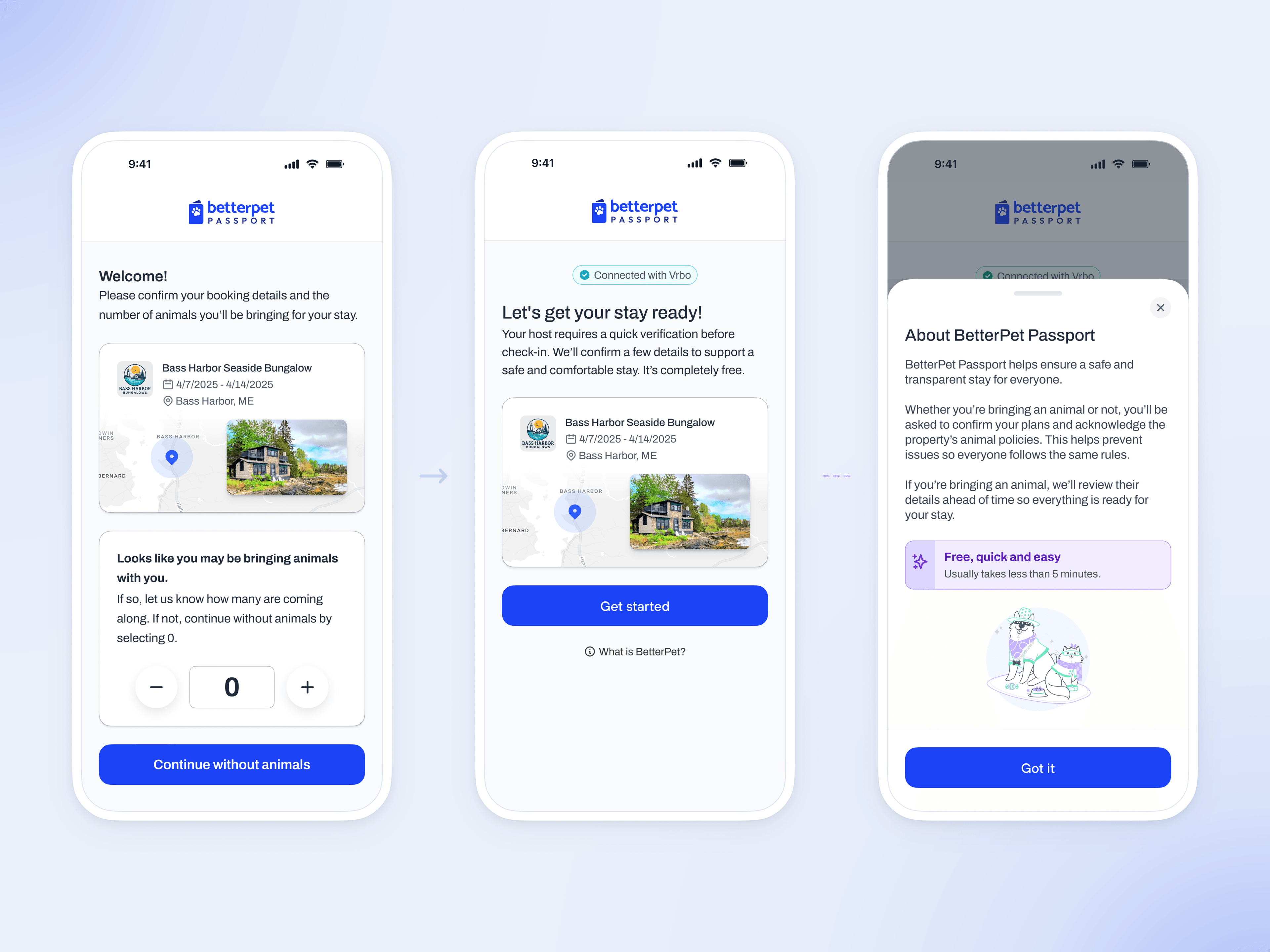
Usability testing showed that guests felt more confident when they understood they were completing a legitimate verification process connected to their reservation. Rather than relying solely on instructional content, the experience incorporated trust-building cues such as reservation details, partner platform indicators, and transparent messaging throughout the journey.
These signals reassured guests that the requested information was relevant to their stay, reduced hesitation when sharing personal information and supporting documentation, and strengthened confidence throughout the verification process.
Improving system feedback through in-app notifications
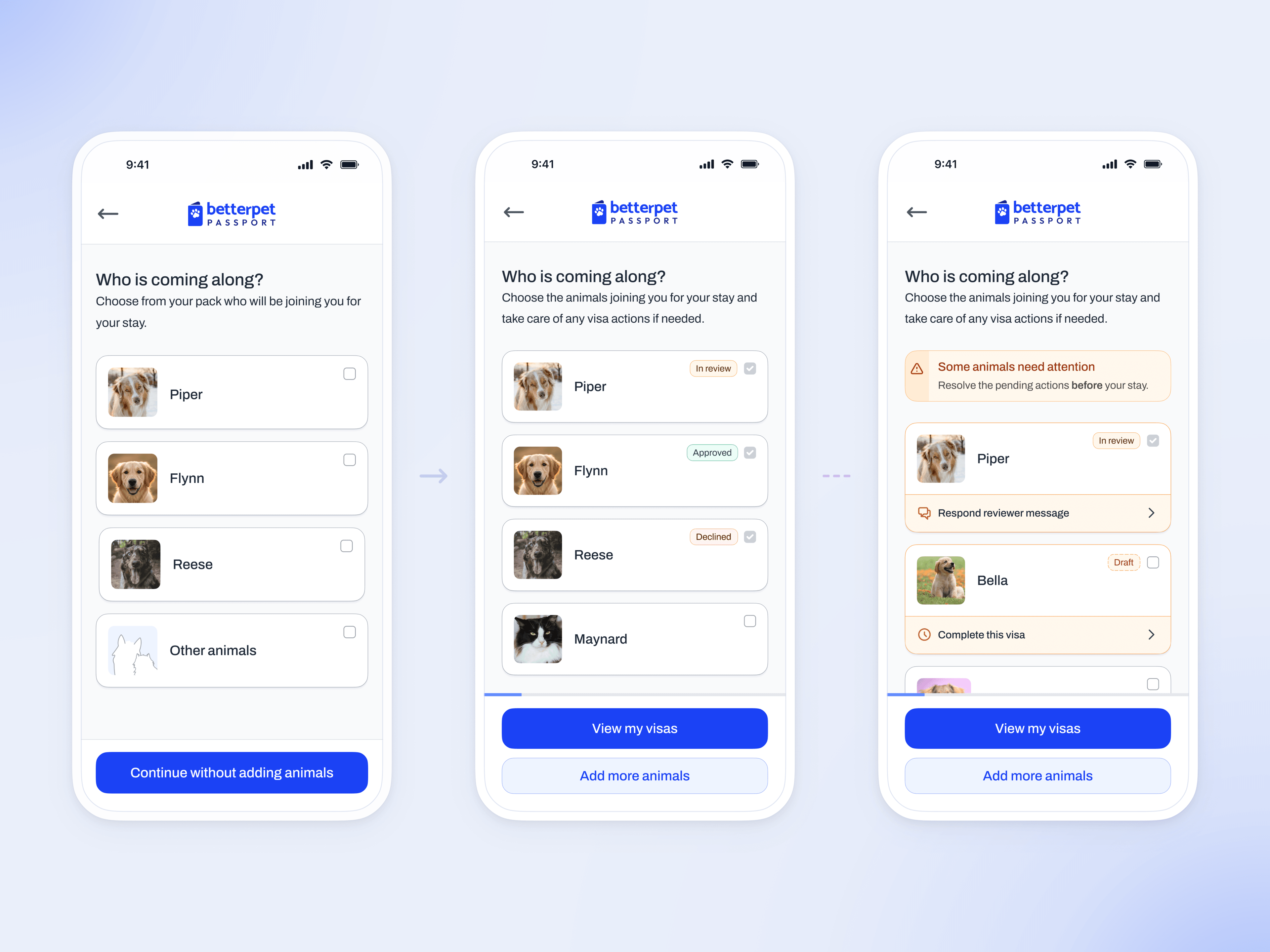
As the product evolved, usability findings and product observations revealed that guests often lacked visibility into what was happening after submitting their information. Important reviewer messages, visa statuses, and required actions were difficult to find, creating uncertainty and delaying the verification process.
Rather than treating this as a simple notification update, I expanded the solution by redesigning the post-submission experience. Status indicators, contextual alerts, reviewer messages, and next-step guidance were integrated into the interface, making the verification process more transparent and helping guests understand what had happened, what required their attention, and what to do next.
RESULTS & IMPACT
Making complexity feel simple
Achieved a 98% submission rate while continuously evolving the product to support increasingly complex guest scenarios and business requirements.
Survey responses consistently showed high satisfaction, with most guests rating the experience 5 out of 5 and describing the onboarding process as easy to complete.
Progressive disclosure, contextual guidance, trust cues, and clearer system feedback helped guests complete onboarding more efficiently.
FINAL THOUGHTS
Designing products as systems
Working on BetterPet Passport reinforced that evolving a product requires more than designing new features. It requires understanding the problems behind user behavior, business requirements, and operational constraints before deciding what to build.
Throughout this project, research, product analytics, usability testing, and cross-functional collaboration informed design decisions that balanced user needs, business requirements, and technical constraints. This approach made it possible to continuously evolve a complex product while preserving a clear, intuitive, and consistent experience for guests.